
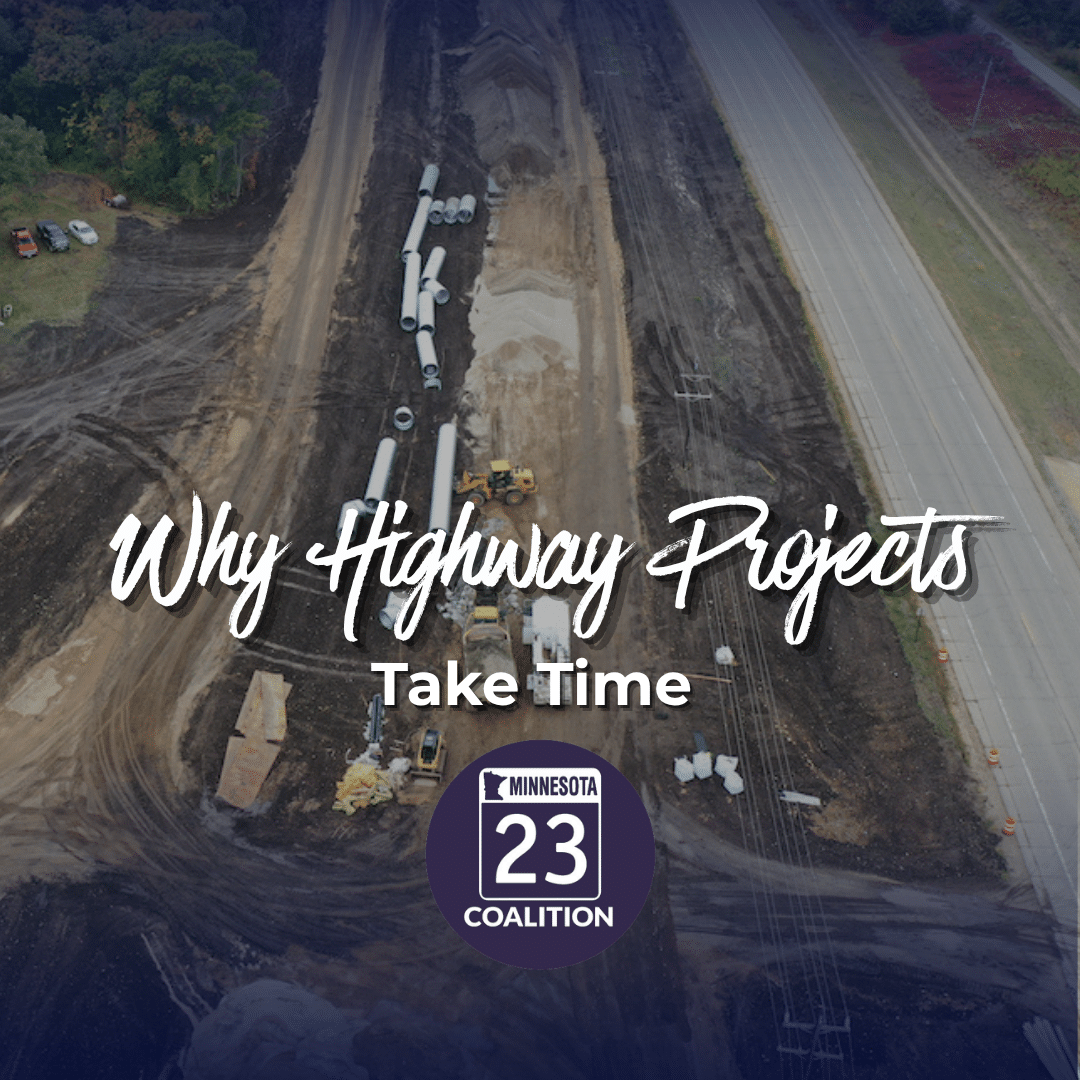
When people see orange cones, heavy equipment, and crews working along a highway, it can feel like a project suddenly appeared overnight.
The reality is quite different.
Most major transportation projects spend years moving through planning, engineering, environmental review, and funding discussions before construction ever begins. By the time the first shovel hits the ground, countless hours have already been invested behind the scenes.
Along the Highway 23 corridor, many of the projects communities are discussing today are the result of years of collaboration between local leaders, transportation agencies, businesses, and advocates working toward safer and more efficient travel.
It Starts With Identifying a Need
Every transportation project begins with a question:
What problem are we trying to solve?
Sometimes the answer is safety. Other times it may be congestion, freight movement, aging infrastructure, or improving connections between communities.
Along Highway 23, transportation improvements have historically focused on reducing crashes, improving reliability, supporting economic development, and creating a corridor that better serves the people and businesses that depend on it every day.
Before any project can move forward, transportation planners must understand existing conditions, analyze traffic patterns, and identify the greatest needs.
Exploring Potential Solutions
Once a need has been identified, transportation professionals begin evaluating possible solutions.
That does not always mean adding lanes or building new roadways. Sometimes improvements may involve intersection changes, access management, safety enhancements, bridge improvements, or other targeted investments.
During this stage, multiple options are often considered before a preferred solution is selected. Public feedback, local priorities, engineering requirements, and long-term transportation goals all help shape the final recommendation.
This work helps ensure projects are designed to address current needs while also supporting future growth.
Turning Ideas Into Plans
After a preferred solution is identified, detailed planning and engineering work begins.
This is where many of the terms people hear at public meetings come into play. Preliminary layouts, traffic studies, environmental reviews, and design plans all help determine exactly how a project could be built.
Think of this phase as creating the project's blueprint.
Engineers evaluate how a project will function, how it will connect with surrounding roads, and what impacts it may have on nearby properties, utilities, and natural resources.
While this work often happens behind the scenes, it is one of the most important steps in the entire process.
Environmental Review Matters
Transportation projects today involve more than engineering and construction.
Many projects must also complete environmental reviews and meet state and federal requirements before they can move forward.
For example, some projects are required to evaluate greenhouse gas impacts and identify ways those impacts could be offset through conservation efforts, environmental improvements, or other mitigation strategies.
While these requirements can add complexity to a project, they are an important part of the modern transportation planning process.
Funding Is Often the Longest Step
One of the biggest misconceptions about transportation projects is that once a plan is complete, construction begins immediately.
In reality, securing funding can take years.
Transportation funding is highly competitive, and projects often compete with other priorities across Minnesota and the nation. Local governments, regional partners, MnDOT, state leaders, and federal officials all play a role in determining which projects move forward and when.
This is one reason advocacy remains so important.
Why Advocacy Matters Along Highway 23
For decades, the Highway 23 Coalition has worked to ensure the corridor remains part of transportation conversations at the local, state, and federal levels.
Many of the improvements completed along Highway 23 did not happen because a project simply appeared on a list. They happened because communities, businesses, elected officials, and advocates consistently worked together to highlight the corridor's importance to safety, economic development, agriculture, freight movement, and regional connectivity.
Advocacy helps keep projects moving through the development process, even when construction may still be years away.
Looking for Current Construction Information?
The Highway 23 Coalition works to keep members informed about long-term transportation improvements and corridor priorities, but the best source for real-time construction updates is MnDOT.
For current road work, traffic impacts, detours, and travel information, visit MnDOT's project pages or check 511 Minnesota before you travel.
Progress Happens Long Before Construction Begins
The next time you drive past a construction project, remember that the work you see is often the final chapter of a much longer story.
Every study completed, every design milestone reached, every funding discussion held, and every advocacy effort undertaken helps move transportation improvements one step closer to reality.
Along the Highway 23 corridor, progress is not measured only by miles of pavement. It is also measured by the planning, partnerships, and persistence that help create a safer and more connected future for the communities we serve.