
If you've driven Highway 23 through Marshall, you've probably encountered one.
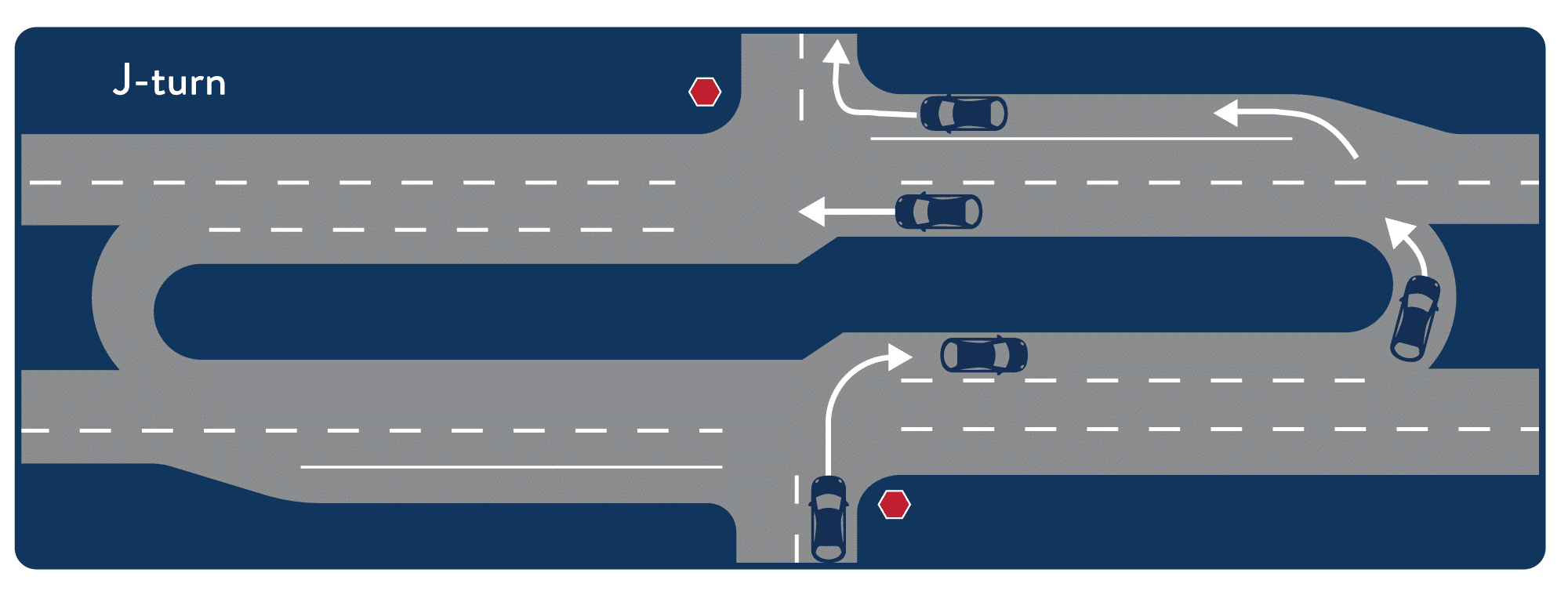
Instead of crossing directly over the highway or making a traditional left turn, drivers are directed to turn right first and then use a designated U-turn lane. These intersections are commonly called "J-turns," but their official name is a Reduced Conflict Intersection (RCI).
At first glance, they can feel unfamiliar. However, these intersections were designed with a simple goal: improving safety.
Why Traditional Intersections Can Be Challenging
At a traditional intersection, drivers may need to cross multiple lanes of traffic or judge gaps coming from several directions at once. These situations create numerous opportunities for serious crashes, particularly broadside or "T-bone" collisions.
As traffic volumes increase, so does the complexity of those decisions.
Transportation engineers are constantly looking for ways to reduce the number of conflict points where vehicles can cross paths. One solution that has been used successfully across Minnesota is the Reduced Conflict Intersection.
How a J-Turn Works
A J-turn changes how drivers enter or cross a divided highway.
Instead of turning left directly onto the highway or crossing all lanes at once, drivers first make a right turn. They then use a designated median opening to safely make a U-turn and continue in their desired direction.
While it may add a few seconds to a trip, the design allows drivers to focus on one direction of traffic at a time, reducing the risk of severe crashes.
Highway 23 Drivers Have Already Seen These Improvements
Marshall has become a familiar example of how Reduced Conflict Intersections can be incorporated into the Highway 23 corridor.
Over the past decade, several J-turn intersections have been constructed along Highway 23 in Marshall, including locations at Saratoga Street, Lyon Street, and County Road 7. These projects were implemented to improve safety and traffic operations along one of the busiest segments of the corridor.
For many travelers, these intersections have become a normal part of navigating Highway 23.
Safety Is More Than Adding Lanes
When people think about transportation improvements, they often picture major projects such as new lanes, bypasses, or roadway expansions.
Those projects remain important, but safety improvements can also come from smaller design changes that help reduce crash risks at specific locations.
Along the Highway 23 corridor, transportation improvements take many forms. Sometimes progress means adding capacity. Other times it means redesigning an intersection to help drivers make safer decisions.
Both approaches support the Coalition's long-standing goal of creating a safer, more efficient transportation corridor for residents, businesses, agricultural producers, and visitors.
Looking Ahead
MnDOT is currently planning another Reduced Conflict Intersection along Highway 23 in Marshall at the intersection of Tiger Drive, near Marshall Senior High School and Southwest Minnesota State University. The project is currently scheduled for construction in 2028 and is intended to further improve safety for travelers in the area.
As Highway 23 continues to evolve, projects large and small will play a role in improving safety, mobility, and reliability across the corridor.
The next time you drive through one of Highway 23's J-turn intersections, you'll know there is more behind the design than meets the eye. What may seem unusual at first is actually the result of careful planning focused on helping everyone reach their destination safely.